Clyosphere Project
Scope
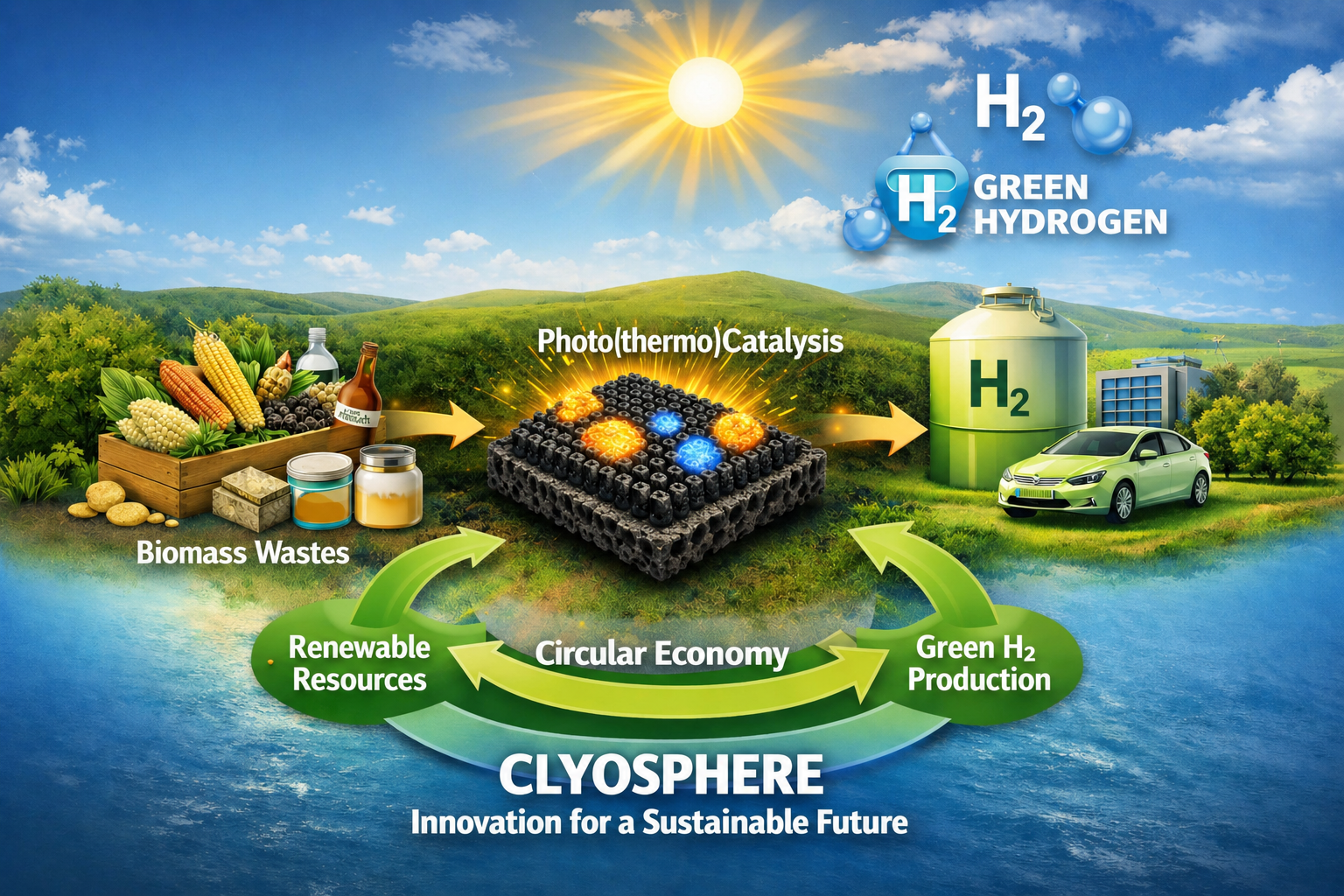
CLYOSPHERE project intends to demonstrate that it is possible to produce clean hydrogen from the photothermal transformation of biomass-derived compounds dissolved in water, using solar light by integrating novel photoactive catalysts inside an innovative photoreactor based on solar Compound Parabolic Concentrator (CPC) configuration.
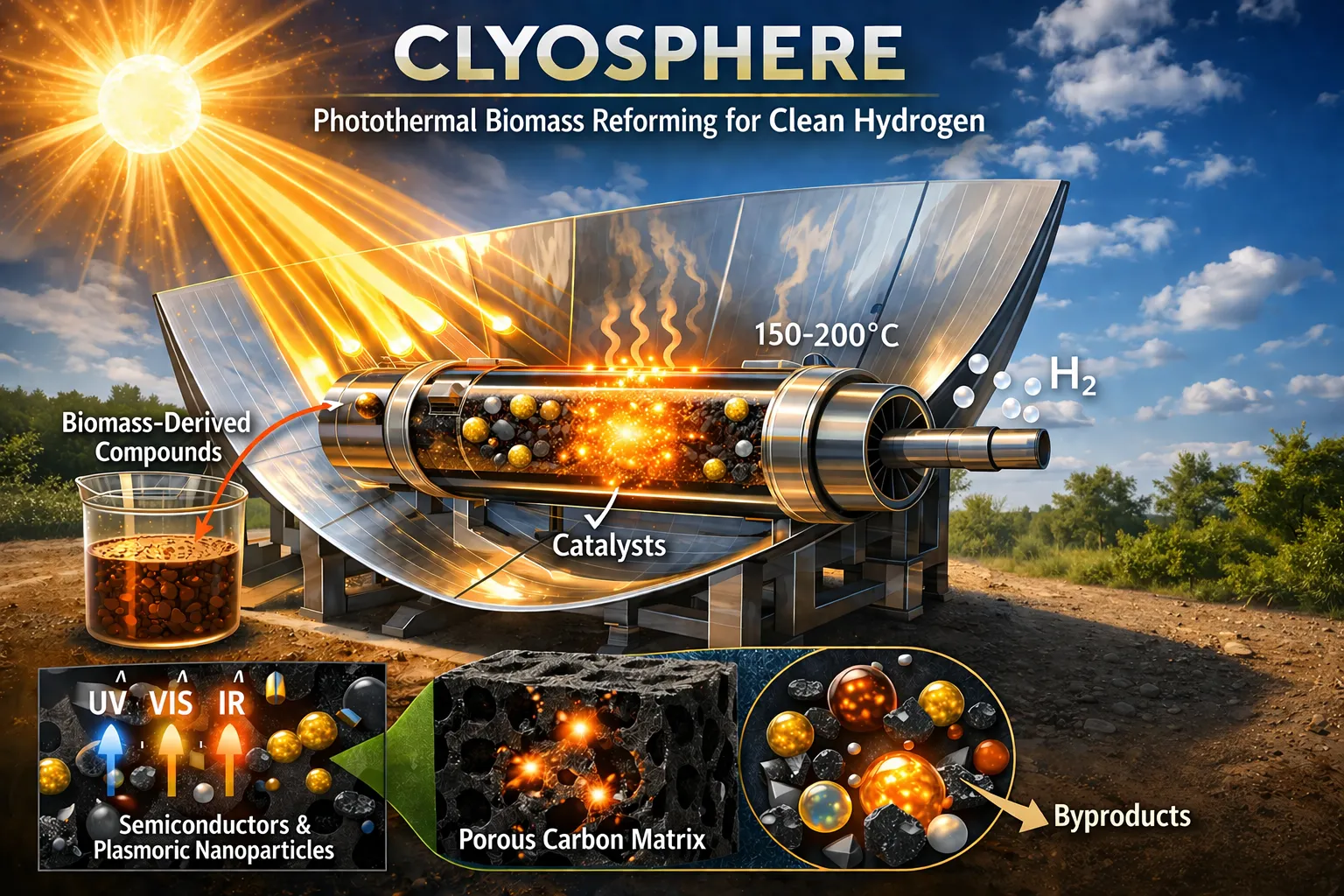
To reach this objective, CLYOSPHERE will develop new photo(thermo)catalysts based on bare semiconductors or their heterostructures capable of absorbing in the UV, Vis and IR solar irradiation, and metal nanoparticles presenting plasmonic effect and integrated in 3D porous carbon supports -materials with strong light absorbing features and thermal conductivity- inside the photoreactor.
This configuration will allow solar irradiation to be concentrated, so as to reach temperatures of ca. 200-300 °C. Thus, the photo(thermo)reforming of the aqueous biomass-derived compounds solution to obtain clean hydrogen will operate under a continuous feed of the liquid solution into the CPC photoreactor which will instantaneously vaporize inside it. CLYOSPHERE proposes a technological alternative to water electrolysis to produce hydrogen and simultaneously oxidize biomass waste derived compounds dissolved in water by a moderate temperature photo(thermo)photocatalytic solar-driven process.
CLYOSPHERE will demonstrate that this approach is able to exploit solar radiation in a much more efficient way than current photocatalytic (water-splitting) solutions, thus complying with the expected scopes of the call. More specifically, these objectives fit the Transition Initiative 3 (TRI3) of CETPartnership call and are relevant to Call Module CM2023-05 (Hydrogen and renewable fuels) aiming to fund projects contributing to developing clean technological solutions for hydrogen production with lower CO2 emissions.
Objectives
The overall aim of CLYOSPHERE is to demonstrate clean hydrogen production from the photothermal transformation of biomass-derived compounds, using solar light by integrating novel photoactive catalysts inside an innovative photoreactor based on solar Compound Parabolic Concentrator (CPC) configuration.
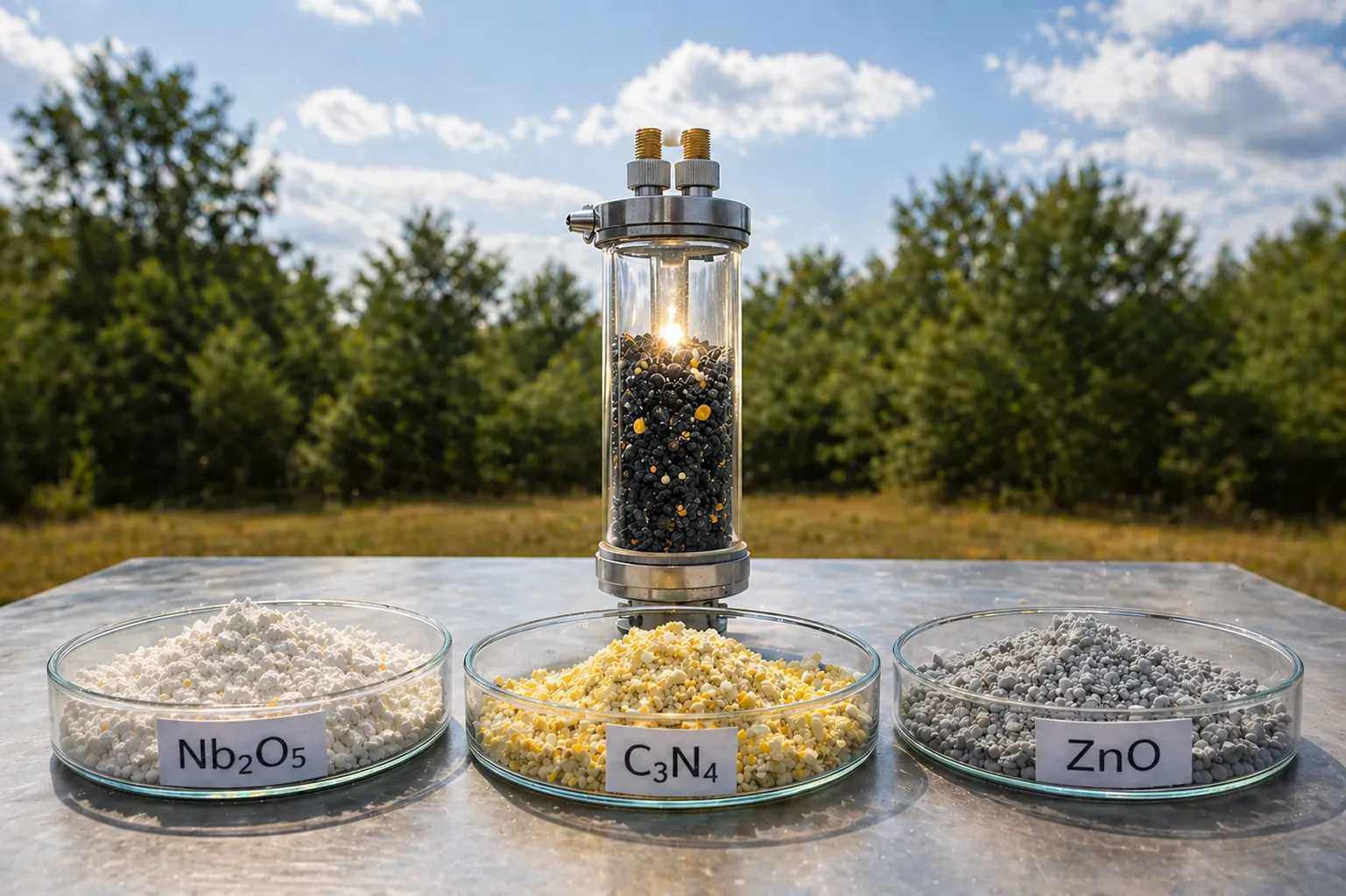
To reach this objective, CLYOSPHERE will develop new photo(thermo)catalysts based on semiconductors (Nb2O5, C3N4, TiO2, ZnO, etc.) and their heterostructures (e.g., Nb2O5/C3N4, TiO2/C3N4, ZnO/C3N4) capable of absorbing in the UV, Vis and IR solar irradiation, and metal nanoparticles presenting plasmonic effect and integrated in 3D porous carbon bodies -materials with strong light absorbing features and thermal conductivity- inside the photoreactor, allowing also a perfect flow-through architecture with maximized solar absorption.
The main unsolved technological challenges for the broad implementation of a green hydrogen economy come out from: 1) reach independence from fossil fuels, boosting the use of solar energy; 2) increase the energy efficiency of catalytic processes (more efficient, selective and stable materials). Two key aspects must be solved before solar photocatalytic production of H2 becomes a mature technology: (1) the need for efficient, stable and cost-effective photocatalysts with activity under solar light; (2) the development at large-scale of high-throughput plug-flow type photoreactors suitable for outdoor operation. CLYOSPHERE aims to fulfil these challenges by the combination of light and heat from solar energy coupled to designed hybrid catalyst(s) to control activity/selectivity.
Workpackages
WP1. Synthesis and Characterization of the photocatalyst heterostructures
To prepare and characterize heterostructures of various semiconductors to favour the absorption of photons in the visible region of the sunlight irradiation;
To synthesize and characterize 3D and 2D porous carbons with controlled porosity and composition to be used as supports of the semiconductors heterostructures; To synthesize hybrid semiconductor/carbon photo(thermo)catalysts capable of capturing the UV, Visible and IR regions of the solar spectrum; To establish quantitative structure-activity relationships to identify the active center(s), the catalytic mechanism(s), and the kinetics of the reactions.
WP2. Evaluation of the solar PTC activity
Study of activity under the combined effect of heat and light, with emphasis on the analysis of the different role that the combination of heat with UV, visible and nIR can take on the performance of the systems; Quantitative analysis of photo-thermo functional properties. Activity and selectivity; Establish a methodology to measure synergy.
WP3. Design & development of the solar photo(thermo)reactor
To design, upscale (TRL5) and build a photo(thermo) reactor for hydrogen production; Evaluation of the techno-economic feasibility of the upscaled solar(thermo)catalytic technology for large-scale production.
WP4. Solar PTC assay at bench scale
To test the solar PTC performance of the optimized catalyst in the reactor for H 2 production under simulated solar light; To test the solar PTC performance of the optimized catalyst in the reactor for H 2 production under natural solar light.
WP5. Project Coordination, Dissemination and Communication
To manage & coordinate all project activities, including the internal work flows and external flow of information, provisions for deliverables and risk mitigation. To ensure the proper communication and collaboration between all partners. To monitor and review work progress, quality of outputs and results; manage project risks and facilitate the data management plan and project databases.
WP6. Reporting and Knowledge Community
To maximize visibility and cultivating interest in participatory practices that promote trust and engagement in scientific ideas. This WP will be dedicated to reporting the outcomes of CLYOSPHERE, implementing the feedback from CETPartnership team, as well as sharing results, knowledge gathered and experience with the Knowledge Community.
Expected Results
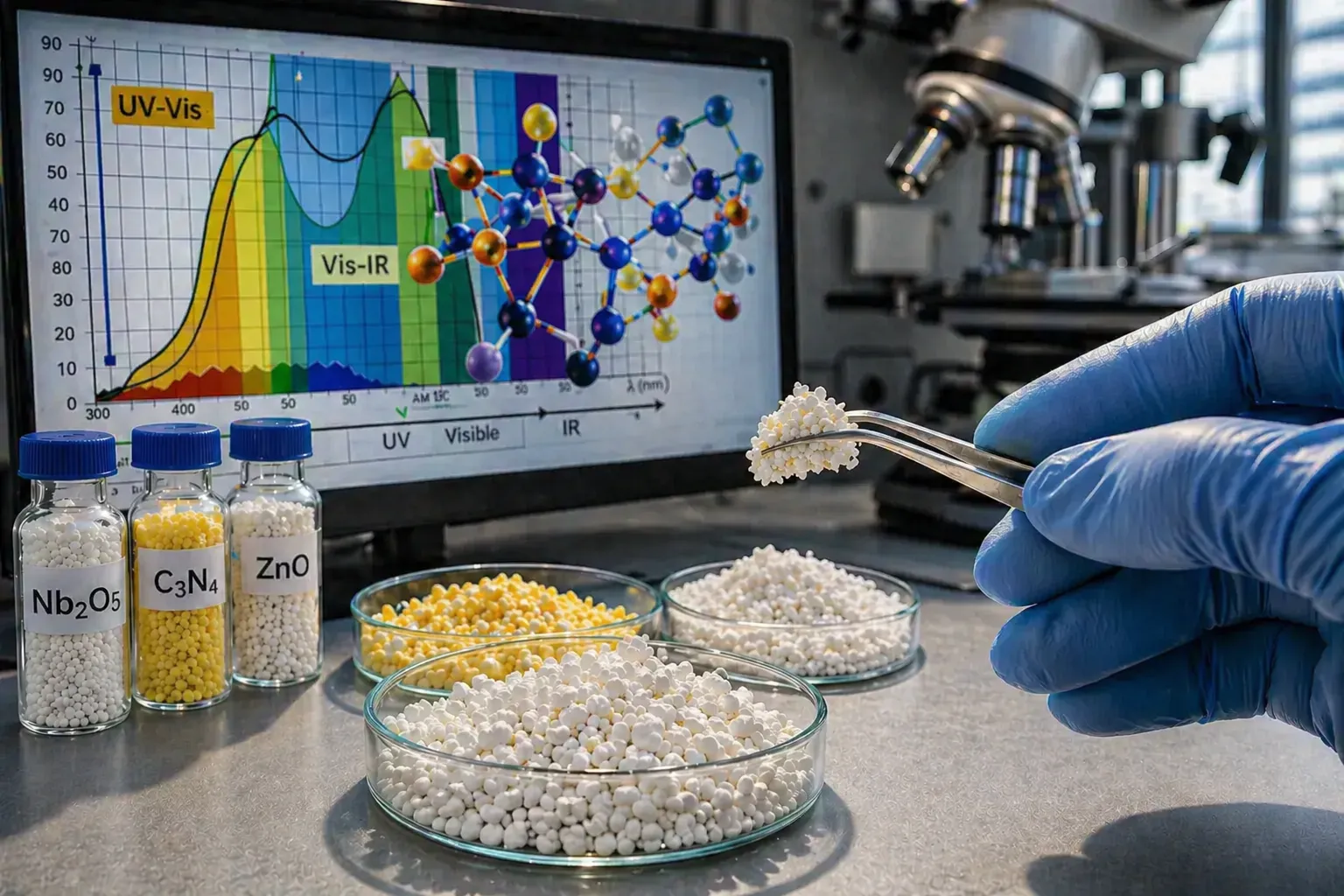
CLYOSPHERE aims to demonstrate how it is possible to obtain clean green hydrogen from the photo(thermo)catalytic reforming of biomass-derived feedstocks or waste products in vapor phase and using solar light, by integrating an innovative concept of photoactive catalysts (UNIPA) immobilized in 3D porous carbon support (CNRS) and integrated in an ad-hoc modified solar CPC photoreactor (APRIA, CSIC). We will use biomass wastes (e.g., sugars and alcohols from fermentation processes, glycerol-water mixtures) for the production of hydrogen.
CLYOSPHERE innovations will trigger the development of a breakthrough technology capable of harvesting solar energy and bio-derived or waste reactant mixtures as renewable sources for the production of green H2. This is expected to strengthen the solar-energy conversion and circular technologies EU value-chain in terms of innovation and future commercialization. CLYOSPHERE will contribute to the construction of a bench scale demonstrator.