



About the CLYOSPHERE Project
CLYOSPHERE aims to demonstrate clean hydrogen production from biomass-derived compounds using solar-driven photo(thermo)catalysis. The project combines innovative catalysts with a solar CPC photoreactor to efficiently convert solar energy into heat and chemical reactions.
New hybrid catalysts (semiconductors, metal nanoparticles, and porous carbon supports) are developed to absorb the full solar spectrum (UV–Vis–IR). The reactor concentrates sunlight to reach 200–300 °C, enabling continuous hydrogen production from biomass-based solutions.
This approach offers an alternative to water electrolysis while valorizing biomass waste such as sugars, alcohols, and glycerol. CLYOSPHERE addresses key challenges: improving catalyst efficiency and scaling up solar photoreactors.
The project includes catalyst development, performance evaluation, reactor design, and experimental validation. It ultimately aims to deliver a bench-scale demonstrator and a breakthrough technology for sustainable hydrogen production.
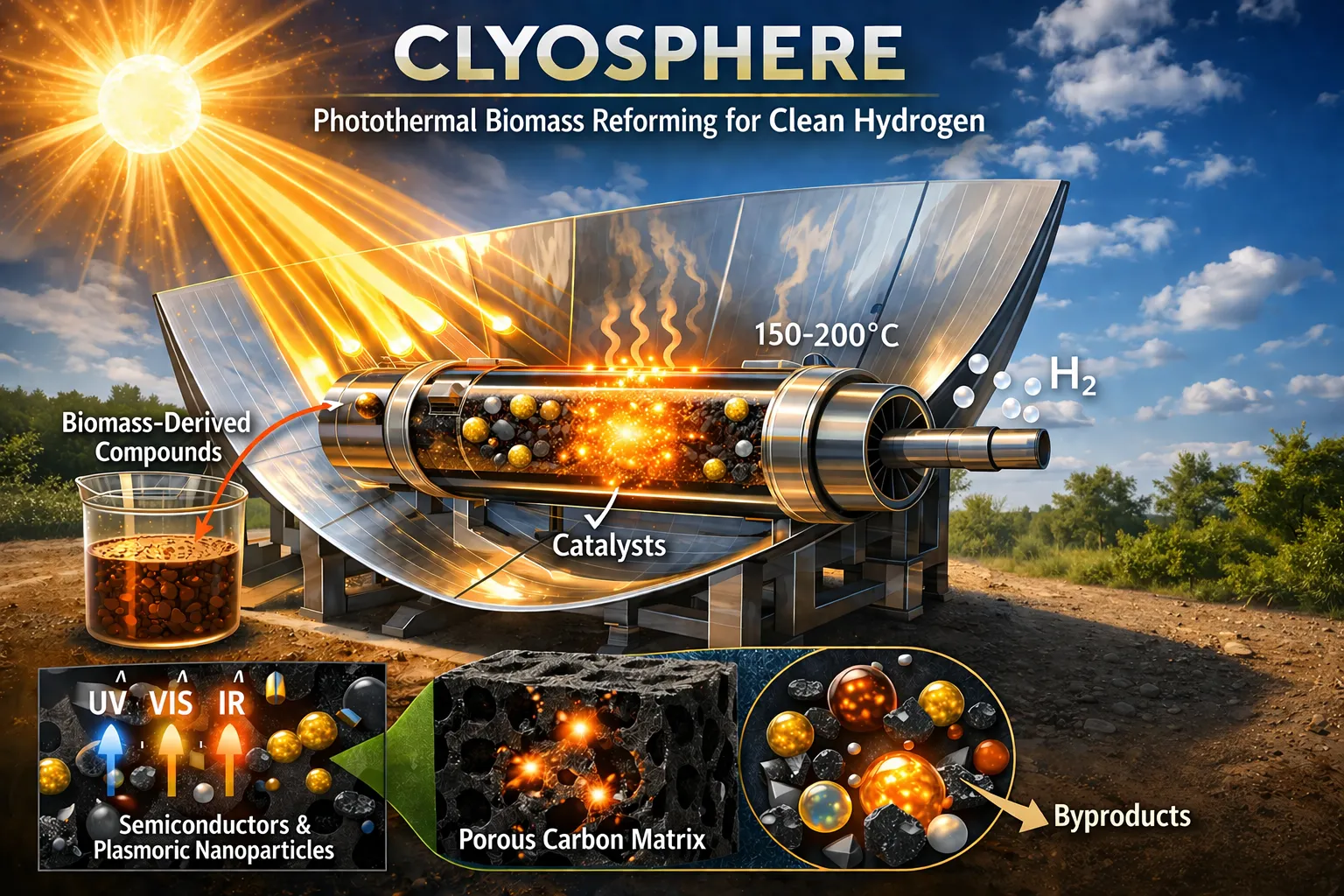
Scientific & Technological Challenge
- Development of advanced photo(thermo)catalysts
- Design of an innovative solar CPC photoreactor
- Hydrogen production from biomass-derived molecules
- Improved solar energy utilisation
- Validation at laboratory and pilot scale
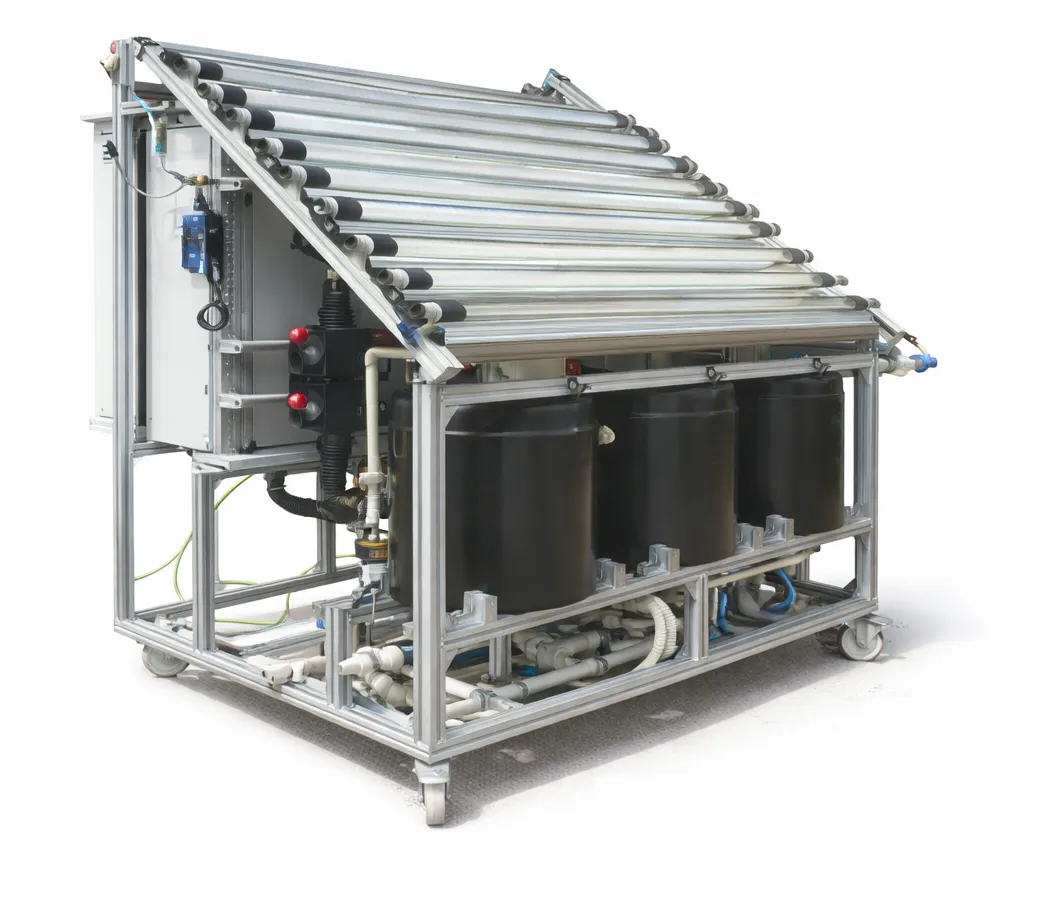
Funding & Project Partners
CLYOSPHERE is supported by several European research organisations and institutions involved in sustainable hydrogen and solar energy research. The consortium brings together universities, research institutes and technology partners across Europe.





This research was funded by CETPartnership, the European Partnership under Joint Call 2022 for research proposals, co-funded by the European Commission (GA N°101069750) and with the funding organisations listed on the CETPartnership website.